If you’ve ever looked at a warehouse, shopping plaza, or office complex, you’ve probably noticed one thing they all have in common — flat roofs.
So why are flat roofs common on commercial buildings? It comes down to efficiency, cost, and practicality. Here’s what property owners and managers in South Florida need to know.
Cost-Effective for Large Structures
Commercial buildings often span tens of thousands of square feet. Flat roofs require fewer materials and are faster to install compared to pitched systems, making them significantly more cost-effective at scale.
That’s also why many business owners ask: how much does a new commercial roof cost?
The honest answer is that it varies based on several factors:
- Roof size and square footage
- Material type (TPO, PVC, modified bitumen, BUR, metal)
- Tear-off requirements for existing systems
- Insulation needs
- Drainage upgrades
A professional inspection is the most reliable way to get an accurate number. Crest Roofing provides free commercial roof assessments across Broward and Palm Beach County with no obligation.
Easier Equipment Installation
Flat roofs provide dedicated space for rooftop systems that would otherwise occupy valuable interior square footage:
- HVAC units
- Solar panels
- Ventilation equipment
- Satellite and communication systems
That convenience comes with responsibility, though. Improper flashing around rooftop equipment is one of the most common causes of commercial roof leaks. Every penetration point needs to be properly sealed — not just at installation, but as part of ongoing roof maintenance.
Accessibility and Ongoing Maintenance
Flat roofs are easier to access for inspections and repairs than sloped systems, which is a major operational advantage for commercial properties.
Routine maintenance helps prevent the most common flat roof failures:
- Ponding water from improper drainage slope
- Membrane tears from foot traffic or equipment
- Drainage clogs from debris accumulation
- Flashing failures at edges and penetrations
The National Roofing Contractors Association recommends twice-yearly inspections for most commercial flat roof systems, plus after any major storm event. In South Florida, that cadence is especially important given our hurricane season. Learn more about how often you should inspect your roof in Florida.
The Flat Roof Installation Process
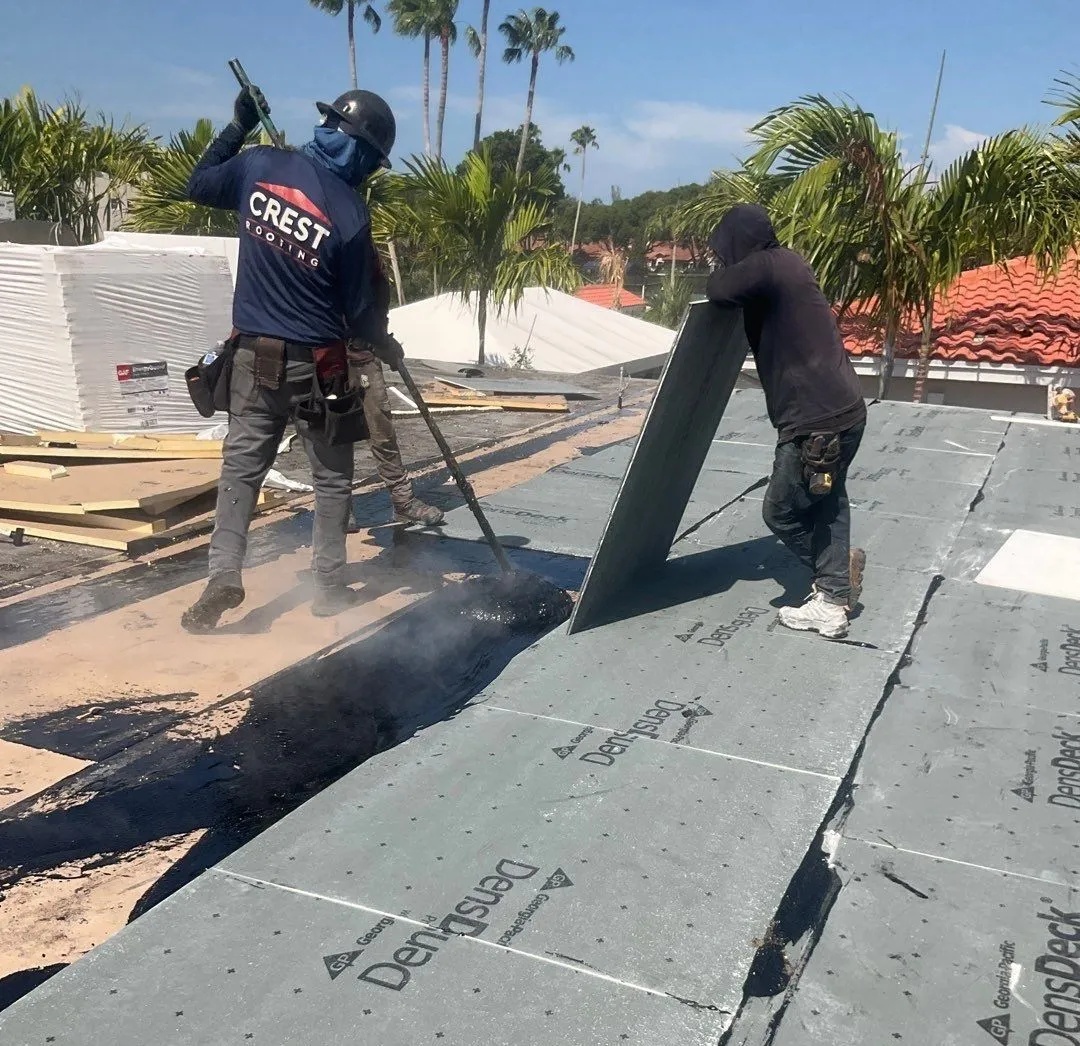
If you’re considering a new flat roof, the general installation process follows these steps:
- Inspection and removal of existing materials if necessary
- Structural assessment of the decking
- Installation of insulation layers
- Application of the membrane system (TPO, PVC, BUR, or modified bitumen)
- Sealing and flashing around all penetrations and edges
- Final inspection and quality check
Professional installation is critical at every stage. Even small errors in seam welding or drainage slope can lead to significant long-term damage. Our commercial roofing team has been handling flat roof installations across Southeast Florida for over 25 years.
Built for Florida’s Climate
Flat roofs may not have the visual appeal of a residential pitch, but they’re engineered for performance. When installed and maintained properly, modern flat roofing systems are durable, heat-resistant, and built to handle South Florida’s storms, humidity, and UV exposure.
The key isn’t just choosing a flat roof — it’s choosing the right materials and a contractor who understands commercial systems inside and out.
If you’re exploring a new commercial roof or need maintenance on an existing flat system, Crest Roofing can evaluate your property and provide clear, straightforward recommendations. Request your free estimate today.